

· AFX Research
Using a Previous Title Policy to Meet the E1527-21 AUL Requirement
The two accepted routes to the 1980 lien and AUL requirement, what a prior title insurance policy actually carries, and the three ways the policy route turns into the slower one.
Table of Contents
When ASTM revised the Phase I standard in 2021, the change with the biggest practical effect was in the environmental lien and AUL section. Research now has to reach back to 1980 rather than to the current owner’s acquisition date. There are two accepted ways to get there, and one of them looks cheaper on paper while frequently costing more in calendar time. It is worth knowing which situation you are in before the report date is close.
The two routes
Both routes reach 1980. They differ in what you have to supply and how many parties have to cooperate.
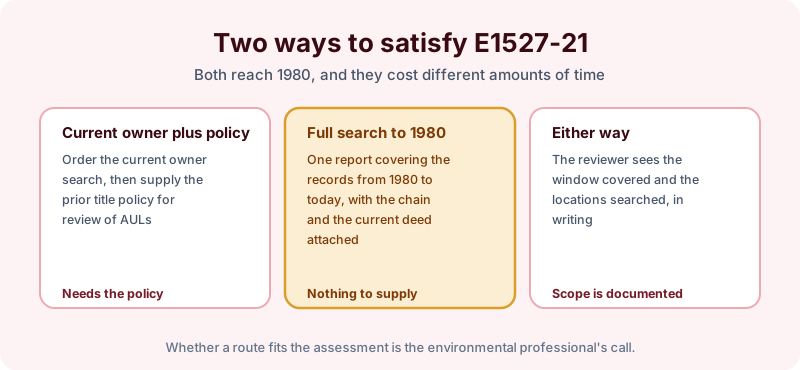
The first route pairs the current owner environmental lien and AUL report, the same report used under E1527-13, with the previous title insurance policy on the property. If a client provides a copy of that policy, AFX reviews it for AULs at no additional cost. The second route is the 1980 Environmental Lien and AUL report, a single search running the land records from 1980 to the present with the chain of title and a copy of the current deed included.
What a title policy actually carries
A title insurance policy is a useful document here, but it was written for a different purpose, and its shape follows that purpose rather than yours.
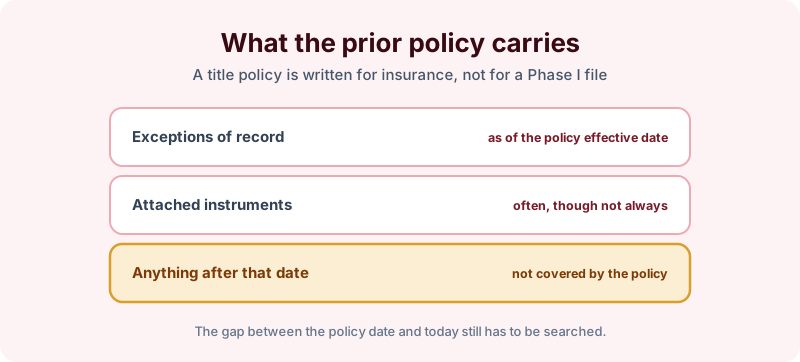
Schedule B lists the exceptions of record as of the policy’s effective date, and recorded restrictions and AULs usually appear there because an insurer excepts what it will not cover. That makes the policy a real window into the record. The window has a hard edge though. A policy speaks as of its own date and no later. Anything recorded after that date is outside it, and that gap still has to be searched.
Where the policy route stalls
In practice, three things turn the cheaper route into the slower one, and they show up often enough to plan around.
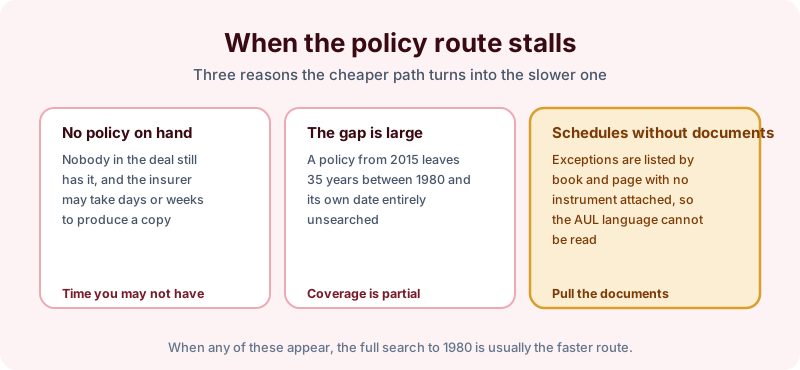
The first is simple availability. Nobody in the deal still has the policy, and asking the insurer for a copy can take days or weeks, which is time a Phase I schedule rarely has. The second is arithmetic. A policy issued in 2015 leaves 35 years between 1980 and its own effective date, and whatever it says about 2015 says nothing about 1987. The third is completeness. Schedule B often lists an exception by book and page with no instrument attached, and an AUL cannot be evaluated from a one line index reference. Somebody still has to pull the recorded document.
Choosing between them
The policy route works well when the policy is already in the file, its effective date is old enough to leave a manageable gap, and the recorded exceptions came with it. That is a real scenario and it saves money when it holds.
When any of the three conditions above is missing, the full search to 1980 is usually the faster path and often the cheaper one once the chasing is counted. It also produces a single document with a stated scope and a list of every location researched, which is easier to hand a reviewer than a search plus a policy plus a note explaining how the two fit together. Our comparison of E1527-13 and E1527-21 covers the rest of what changed between the standards, and the sample reports show how the scope statement reads.
Whether either route satisfies a particular assessment is a judgment for the environmental professional preparing it. A search reports what was found of record in the locations searched and attaches the instruments. It does not decide whether the coverage is adequate for the file.
The takeaway
Both routes to the 1980 requirement are legitimate, and the choice usually comes down to whether the prior policy is genuinely in hand with its exceptions attached. If it is, pair it with the current owner search and let us review it at no extra cost. If it is not, the full search to 1980 avoids a chase you cannot control the timing of. Start the order online, or tell us what you have in the file and we will tell you which route gets you there faster before anything is ordered.