

· AFX Research
Environmental Lien Report Turnaround, What Drives the Timeline
Standard turnaround for each AFX report, the three conditions that reliably add days to a search, and how to order against a Phase I deadline without paying for rush service.
Table of Contents
Phase I Environmental Site Assessments run on schedules set by other people, and the records portion is the piece a consultant has the least direct control over. Knowing what drives the timeline is most of what you need to keep an environmental lien and AUL report ahead of a report date rather than behind it.
Standard turnaround by report
Turnaround varies with the product ordered and the location of the property, but the baselines are stable enough to plan around.
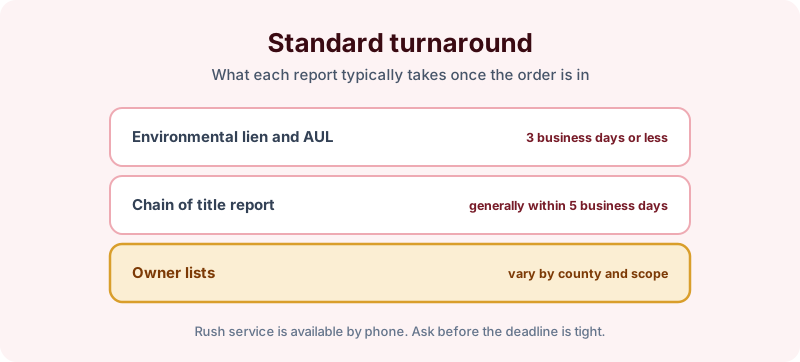
An environmental lien and AUL report is 3 business days or less as a standard. A chain of title report is generally completed within 5 business days, which reflects the extra index walking rather than any difference in how the order is handled. Owner lists sit outside a fixed range because they vary with the county and the scope of the search.
What reliably adds days
Three conditions account for most of the difference between a report that lands early and one that lands at the edge of its window.
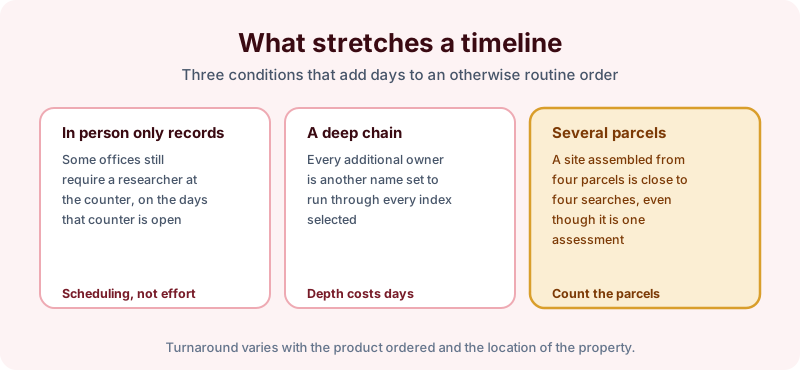
The first is geography rather than effort. Some offices still require a researcher at the counter, and that counter is open on the days it is open. A search that would take twenty minutes online takes a scheduled visit instead, and the calendar sets the pace.
The second is depth. Every additional owner in a chain is another name set to run through every index in scope, so a search back to 1940 genuinely involves more work than one back to 1980, and both involve more than a current owner search.
The third catches people out most often. A site assembled from four parcels is close to four searches, even though it is one assessment and one order. Counting parcels early is the single best predictor of how long a site will take.
Ordering against a deadline
None of the above is a reason to be surprised. All three are visible before the order goes in.
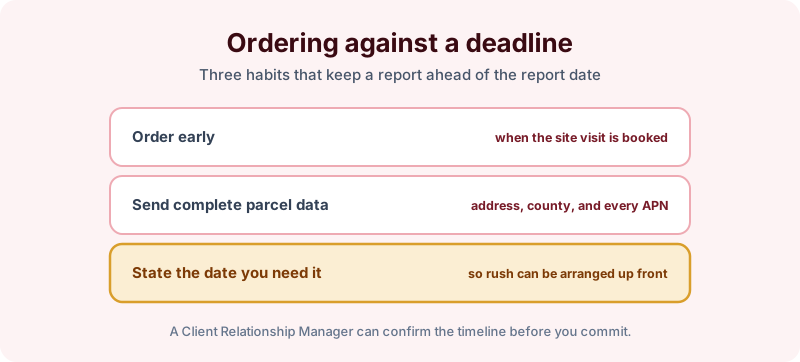
Ordering when the site visit is booked, rather than when the draft is being assembled, puts the records work in parallel with everything else instead of at the end. Sending complete parcel data with the order removes the clarification pause, which is dead time that no amount of rush service recovers. Our guide to parcel identification at intake covers exactly which fields matter.
Saying the date you need the report is the one that people skip. Rush and expedited service is available, and a Client Relationship Manager can arrange it, but arranging it on day one is straightforward and arranging it on day three is a scramble.
It also helps to order the scope the assessment actually calls for rather than the widest one available. A search back to 1980 covers more ground than a current owner search and takes correspondingly longer, and ordering it on a site where the assessment cites E1527-13 spends days buying coverage the file will not use.
Where the shelf life question sits
Assessment schedules also interact with how current the underlying research is. That is a question about the Phase I standard rather than about our production time, and it belongs to the environmental professional preparing the assessment. What we can say is that a report carries its own search date, and a bring to date update on a previously ordered report is available at discounted pricing when the schedule slips far enough to need one.
The takeaway
An environmental lien and AUL report is 3 business days or less as standard and a chain of title is generally within 5, with in person only records, chain depth, and parcel count accounting for most of the variation above that. Ordering early, sending complete parcel data, and naming your deadline handles nearly all of it. Start the order online, or tell us the site and the date you need it and we will confirm the timeline before anything is ordered. For more than ten sites, the FAQ covers bulk and portfolio pricing.